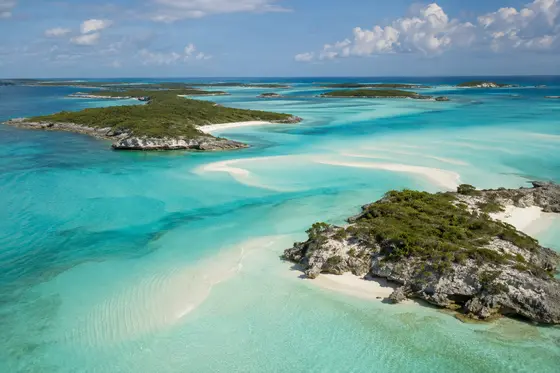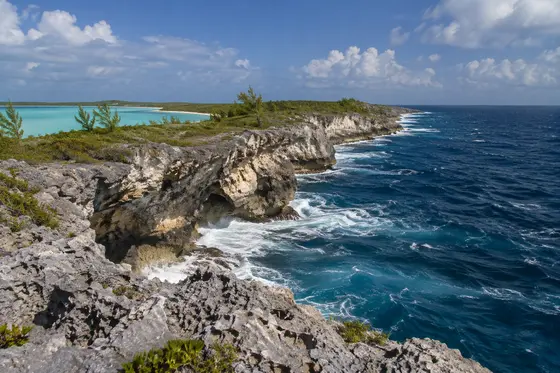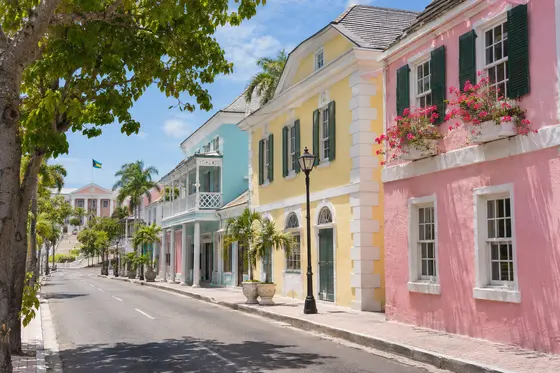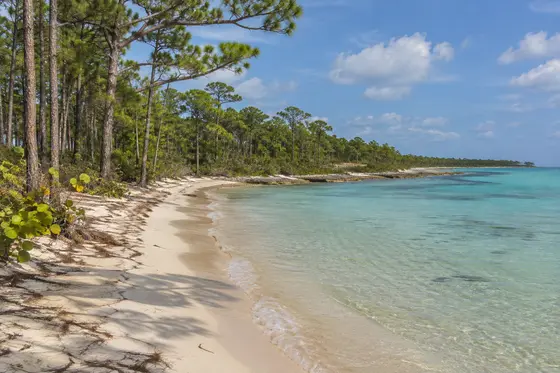
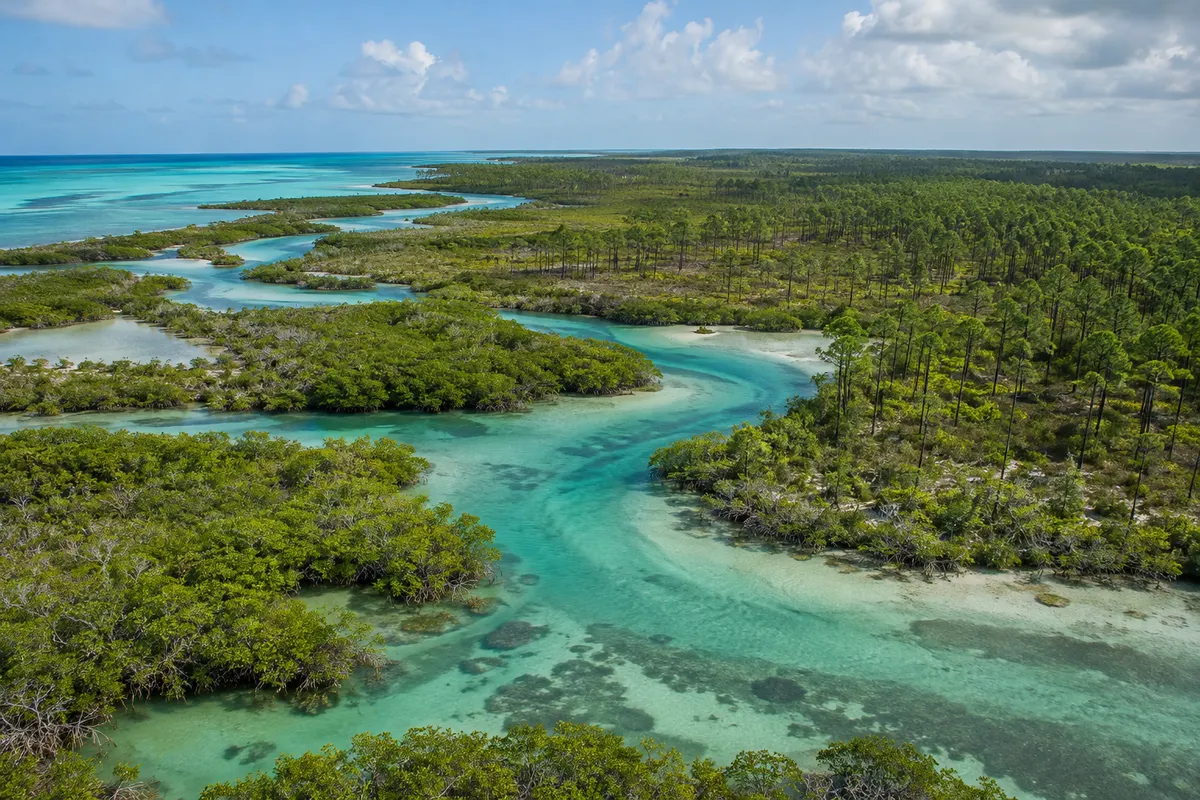
Andros looks rather different from the narrow resort islands that many visitors associate with the Bahamas. Large areas consist of pine forest, wetland, creeks and mangrove habitat. The island is divided by channels, and travel between the different sections calls for more planning than its appearance on a small map suggests.
The eastern coast and the reef
The eastern side faces a remarkable barrier reef. Small settlements provide access to fishing, snorkeling and diving, with local operators familiar with the reefs and channels. Visitors primarily interested in time on the water should choose accommodation close to the guide or marina they intend to use. Weather can determine whether reaching the reef is practical, so allow flexibility.
Inland blue holes
Andros has numerous freshwater and marine blue holes, formed in its limestone landscape. Some are reached by designated trails and others are remote or protected. Blue Holes National Park provides an introduction to this unusual ecosystem. A guide can explain how water moves through the porous rock and why apparently ordinary areas of scrub support important habitats. Do not enter an unfamiliar cave or sinkhole to investigate it yourself.
The west side
Across much of western Andros, extensive mangrove flats and shallow channels provide habitat for fish, birds and other wildlife. The area can be difficult to navigate. A licensed or experienced professional guide is preferable to an improvised boat rental, and visitors should observe the rules of protected areas.
Practical arrangements
North, Central and South Andros have different airports and lodging options. Confirm which airport is nearest to your destination before booking. A quiet holiday here often centres on your lodge, a local guide and one part of the island. That leaves time for things that are easy to miss on a quick visit: evening birds in the trees, small settlements, local crafts and conversations about the water.
A craft to look out for
Andros is also known for Androsia, a locally developed batik tradition using wax-resist patterns and vivid dyes. The fabrics are associated with fish, shells, tropical leaves and other island motifs. It is a more useful keepsake for some visitors than carrying a large decorative object home. Ask about the origin of the cloth when buying garments or other products. The history of the craft provides a welcome change of subject after several days spent talking about the island's reefs and fishing grounds.
Which part of Andros should you visit?
If you browse accommodation listings for the whole of Andros, pay attention to the names of the settlements and the nearby water crossings. Some lodges occupy the northern part of the island, some are near Fresh Creek in Central Andros, and others are on Mangrove Cay or the portion commonly referred to as South Andros. They do not all form one connected holiday resort, and it is not possible to drive the whole length of the land as if it were a single narrow road. The creeks and wider branches between the sections shape the way people travel.
The official island overview is a useful reference for the settlements and airports. San Andros Airport serves the north, while Andros Town Airport is near Fresh Creek. Other local airfields serve the farther reaches. Coordinate your arrival with the accommodation or guide before purchasing a flight, including any separate connections from Nassau. A visitor staying near one of the central settlements has a different choice of beaches, shops and day outings from someone based at a small fishing lodge farther south. Choosing the correct part of Andros is therefore more important than looking for the cheapest nightly rate across the entire island.
Red Bays and a distinctive craft tradition
Red Bays, on the northwestern side of Andros, provides an opportunity to learn about the island through its people rather than its physical landscape alone. The community's history is associated with Black Seminole migration from Florida in the early nineteenth century. Families established themselves in a relatively remote area and developed ways of using locally available materials, among them the silver thatch palm. Skilled weaving survives there today as a tradition passed between generations, with sturdy baskets and other practical household items among its characteristic products.
Look at the construction of a basket, including the way material is prepared, the thickness of the sides and the finished handles. The Bahamas tourism authority's account of Red Bays weaving gives some historical background. Before travelling specifically to meet a maker, enquire about whether they welcome visitors, what can be seen and where their work is sold. It is a residential community, not an open-air display. Buying directly from a maker who can discuss the time involved can make a craft purchase more meaningful than buying something simply because it carries the name of a place. Bear in mind that elaborate work takes time and a particular object may not be available on demand.
Why the land crab matters here
The forests of Andros support populations of land crabs that have long been important to Bahamian cooking and local livelihoods. You may encounter discussions of the season when crabs emerge from their burrows and move through the wooded areas. Their life cycle depends partly on access to coastal habitats for reproduction. This illustrates why an apparently unremarkable patch of inland vegetation can be connected quite directly to the shoreline, and why preserving only beaches does not necessarily protect all marine-related life.
The Bahamas National Trust established the Crab Replenishment Reserve in 2002 with the aim of safeguarding breeding populations. It covers roughly 4,000 acres, including habitat both inland and nearer the coast. This is not a developed attraction with a network of convenient visitor services; the National Trust's reserve information describes it as a wilderness area. Arrange any visit through people familiar with the site and follow conservation restrictions. A meal of crab and rice or crab and dough, when available, can offer a way to connect local cooking with this landscape. If food traditions interest you, enquire when the island's crab celebration will take place rather than assuming it happens every weekend.
Seeing the island's protected landscapes
Andros has several distinct conservation areas. The national marine parks protect parts of the reef system and nearby coastal habitat, while forest and freshwater environments receive protection in the interior. The huge West Side National Park is far removed from a roadside nature trail, with an extensive network of flats and mangroves. The scale is difficult to appreciate without visiting one part of the coast or seeing an aerial photograph of the island.
Check the Bahamas National Trust's Andros parks directory when planning visits. The experience at a developed visitor site will be quite different from an outing in a little-accessed wilderness area, and not all parts of every park are suitable for visitors. Mangrove channels are especially appealing from a boat because you can see varied vegetation and water depths close together, but the habitats themselves are sensitive. A good nature guide can interpret the birdlife and trees without needing to approach animals too closely. The point is not to collect, touch or feed wildlife. Observation is sufficient, and often more rewarding once you understand what is distinctive about the habitat.
A week built around the water and the land
People sometimes come to Andros with a single activity in mind, particularly fly fishing for bonefish or diving. A week-long trip is a useful opportunity to leave one or two days for the shore and the interior. Start with a local orientation near your accommodation, confirm where to buy supplies and establish how your planned guide trips are affected by the weather. Choose one outing that is predominantly marine and one that takes you through a contrasting land habitat. A forest walk can be a welcome change after long hours on a fishing skiff, and a short boat ride may reveal details of the mangrove fringe that you missed while driving.
For travellers sharing their holiday with people who have different interests, allow independent activities where transport arrangements make this comfortable. An ambitious full-day fishing outing is not necessarily ideal for someone who does not enjoy being on a small boat. A guided visit to a settlement, a meal near the lodge or a quiet afternoon with binoculars may be a better alternative. Ask the accommodation what services are available if a planned marine trip is cancelled. On an island of this size, settling into a particular area and understanding it well will usually prove more satisfying than trying to see every landscape on the map.