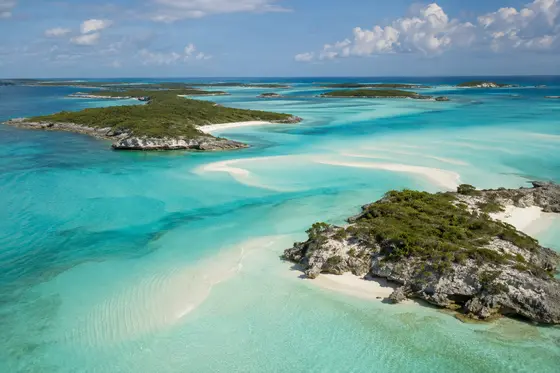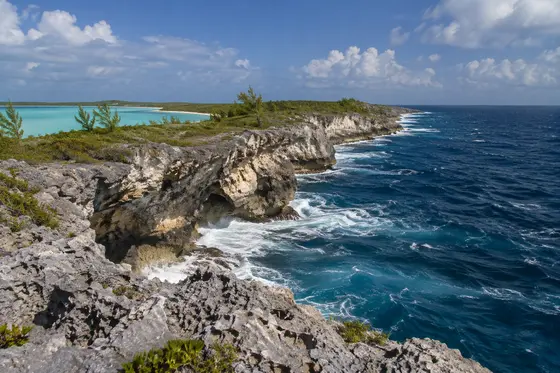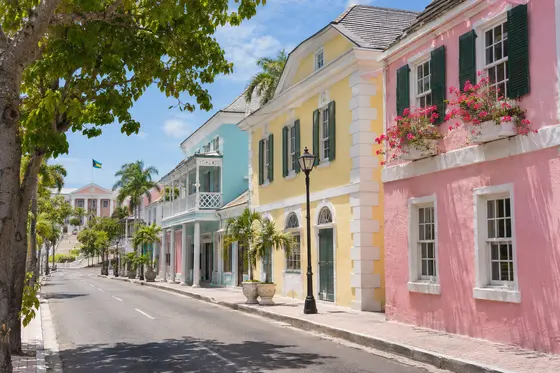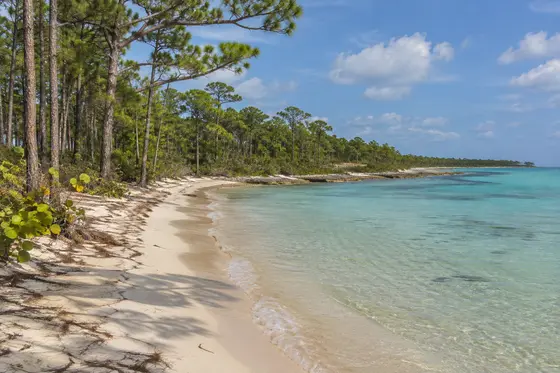
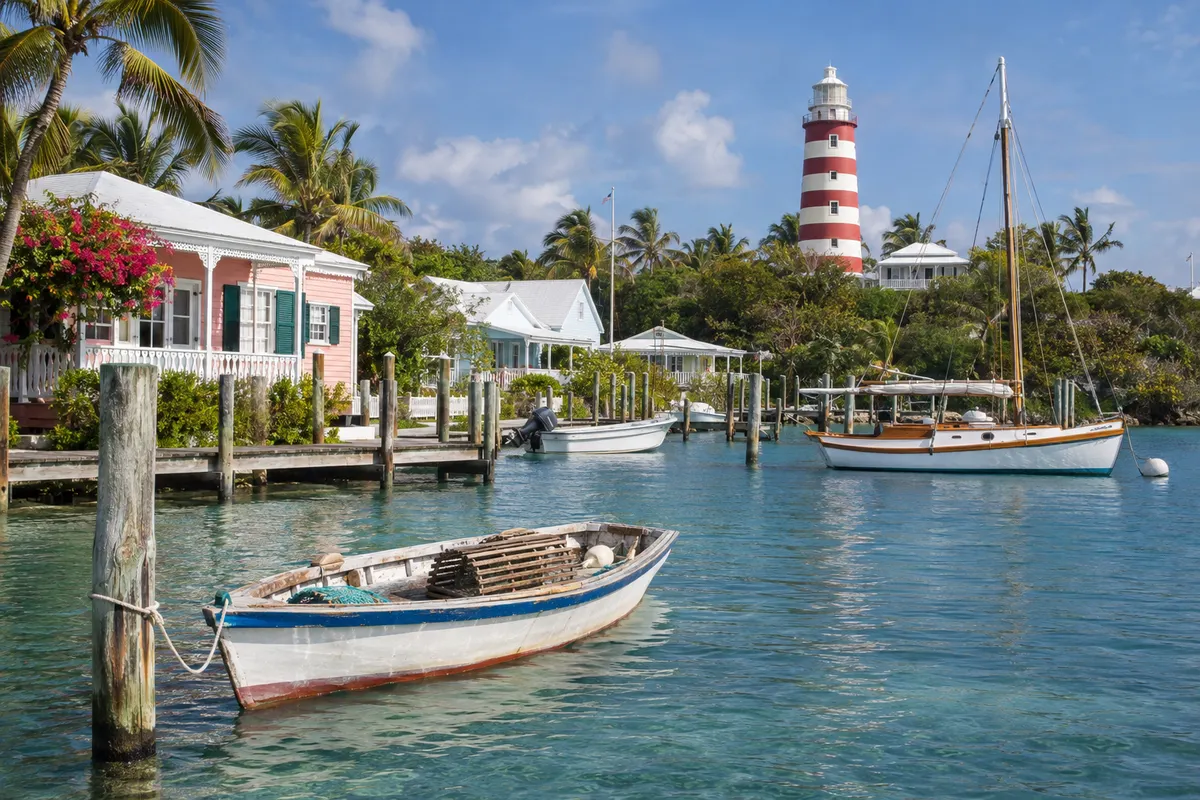
The Abacos are an island chain in the northern Bahamas, with Great Abaco forming much of the mainland and a series of smaller cays along the Sea of Abaco. They have long been associated with boating. A holiday here might be organised around ferries between harbour villages, beach days and time watching the water from a dock.
Marsh Harbour and nearby cays
Marsh Harbour is a transport and commercial centre on Great Abaco. It is a useful place to arrange supplies or transfers before heading to one of the cays. Local ferry services connect several communities, but routes and departure points should be confirmed before you travel. The smaller boats do not always have space for awkward luggage.
Hope Town on Elbow Cay is particularly recognisable by its red-and-white lighthouse. The harbour and narrow village lanes encourage walking. Man-O-War Cay is known for its boatbuilding heritage, and other nearby settlements have individual histories shaped by seafaring. The Abacos suffered extensive damage from Hurricane Dorian in 2019, and recovery has varied across the islands. Check directly that facilities you intend to visit are operating.
Getting out on the water
The Sea of Abaco is sheltered in places, but weather, tides and shallow channels need to be respected. Visitors interested in sailing should seek advice locally about navigation, marina facilities and suitable anchorages. Renting a boat without familiarity with the area is unwise. A short guided trip or a ferry allows you to enjoy the views without taking on the demands of navigation.
Picking a place to stay
Decide how much time you want to spend on Great Abaco and how often you intend to cross to other cays. A room in a smaller harbour village can be lovely if you prefer evenings close to the water. For a longer trip, consider staying in one place rather than moving luggage repeatedly. Confirm the airport and onward connection, and allow some time for a change in weather before your flight home.
A day on a smaller cay
It is possible to get a good impression of a harbour settlement without hiring a boat for the entire week. On a day when the ferry is operating, cross to a nearby cay early, walk through the village and have lunch before returning. Confirm the last sailing and leave a little extra time for the dock. Some roads and paths are quite narrow, with golf carts serving residents as well as visitors. Walk quietly through residential streets and remember that the docks are workplaces, not simply scenic viewpoints.
Green Turtle Cay and New Plymouth
Farther north than Hope Town, Green Turtle Cay has another striking settlement laid out close to the sea. New Plymouth's older buildings and narrow streets reflect its connections to the Loyalist communities that developed in the northern Bahamas in the late eighteenth century. Later generations made their own contributions, and the architecture cannot tell the whole story of the settlement on its own. One way to approach a visit is to pay particular attention to the relationship between the waterfront, public spaces and houses rather than simply search for the most colourful street.
The Loyalist Memorial Sculpture Garden, near the Albert Lowe Museum, commemorates people connected with the area's history, including those who endured enslavement. When you look at such monuments, it is worth remembering the differing experiences of the people who arrived together on these islands and of their descendants. Find out first whether the museum is receiving visitors and whether local exhibitions are scheduled during your stay. Confirm the appropriate ferry departure point on Great Abaco; it is not necessarily the dock you would use for a trip to Elbow Cay. A thoughtfully paced day on Green Turtle Cay can combine both historical interests and a little time on the shore.
Elbow Cay away from the lighthouse
The lighthouse has a distinctive presence, yet much of the pleasure of visiting Hope Town comes from walking around the settlement itself. The outer position of Elbow Cay means there is protected harbour water on one side and ocean shoreline elsewhere. Houses and small businesses occupy the space between them, and the shape of the narrow harbour helps determine how people approach the settlement by boat. From the edge of the water you can gain an idea of how closely the village's routine has been linked to maritime transport.
Allow a little time to find out which paths lead towards the Atlantic shore. Walking provides a better introduction to the compact streets than trying to cover them all at the speed of a golf cart. There may be public access to the beach in certain places, while other routes lead into private accommodation gardens. The distinction matters. A return journey along a different lane can bring you past a church, a small shop or another quiet view over the harbour. The official Abaco island guide introduces Elbow Cay and the nearby communities, but local operators and accommodation providers remain the best source for practical instructions about landings, trails and temporary closures.
A change of scene on Great Abaco
Great Abaco's long main island has much more to offer than supplies and transport at Marsh Harbour. The resort district known as Treasure Cay in the northern part of Great Abaco is associated with a long sandy beach, despite its name suggesting that it lies on a separate offshore island. Great Abaco's scenery changes as the route continues south. Small communities and areas of pine forest occupy large stretches of the inland landscape before the road reaches settlements nearer the southern coast.
Little Harbour is particularly interesting for people drawn to local arts. American sculptor Randolph Johnston and his wife Margot settled there in 1951, and the area subsequently became known for artistic work, including sculpture. The setting is different from that of a purpose-built crafts market; the harbour and the artists' activities have been part of the community's story. Arrange transport carefully before travelling to Little Harbour, and confirm in advance that any establishment you intend to visit is currently open to visitors. A drive farther south towards Sandy Point gives another perspective on Great Abaco. Decide which destination fits the day rather than assuming that every place listed south of Marsh Harbour can comfortably be explored during a single outing.
The Bahama parrot and the marine parks
Abaco National Park protects part of Great Abaco's pine forests. Located in the south of the island, the park was created in 1994 and covers about 22,500 acres. The Abaco population of Bahama parrots has the unusual habit of nesting in cavities in the ground rather than holes in trees, explained in the park's conservation information. A sighting is a matter of patience and chance.
Other parks in the archipelago have a stronger maritime emphasis. Fowl Cays National Park and Pelican Cays Land and Sea Park conserve areas of reef, while Tilloo Cay Reserve provides protection for seabird habitat. The Bahamas National Trust lists the protected areas and describes their principal conservation purposes. Not all are straightforward to reach, and a reef site can call for very different arrangements from an inland forest outing. Check whether permits, a guide or other visitor arrangements are necessary. Never touch a bird or interfere with its nest. Similarly, when watching life underwater, avoid contact with corals and observe from a comfortable distance. These small choices are especially important in areas under conservation management.
A holiday using two or three different bases
Decide how much of the trip should involve time ashore on a cay and how much should focus on travel around Great Abaco. A first visit can be planned with Marsh Harbour or another suitable mainland base for the initial nights, followed by a stay in one of the harbour villages. Reserve a full day for ferry-based exploration, allowing spare time for the crossing in both directions. If travelling in a group or with children, confirm that the smaller lodging's location suits your plans for meals and evenings.
Experienced boaters may structure their trip around a marina or an organised charter instead. For someone unfamiliar with the sea, two shorter water outings can be a better introduction than one demanding trip along every cay on the chart. Stay flexible enough to change the order according to the sea and wind. Since services in parts of the Abacos have continued to evolve after storm damage, contact providers well ahead of your visit.