The Bahamas lies close to Florida, yet arriving at a small island can involve several legs. Many international visitors land at Lynden Pindling International Airport on New Providence, although other islands have airports that receive international flights. The best route depends on your actual destination rather than the cheapest ticket to the country.
Flying to the islands
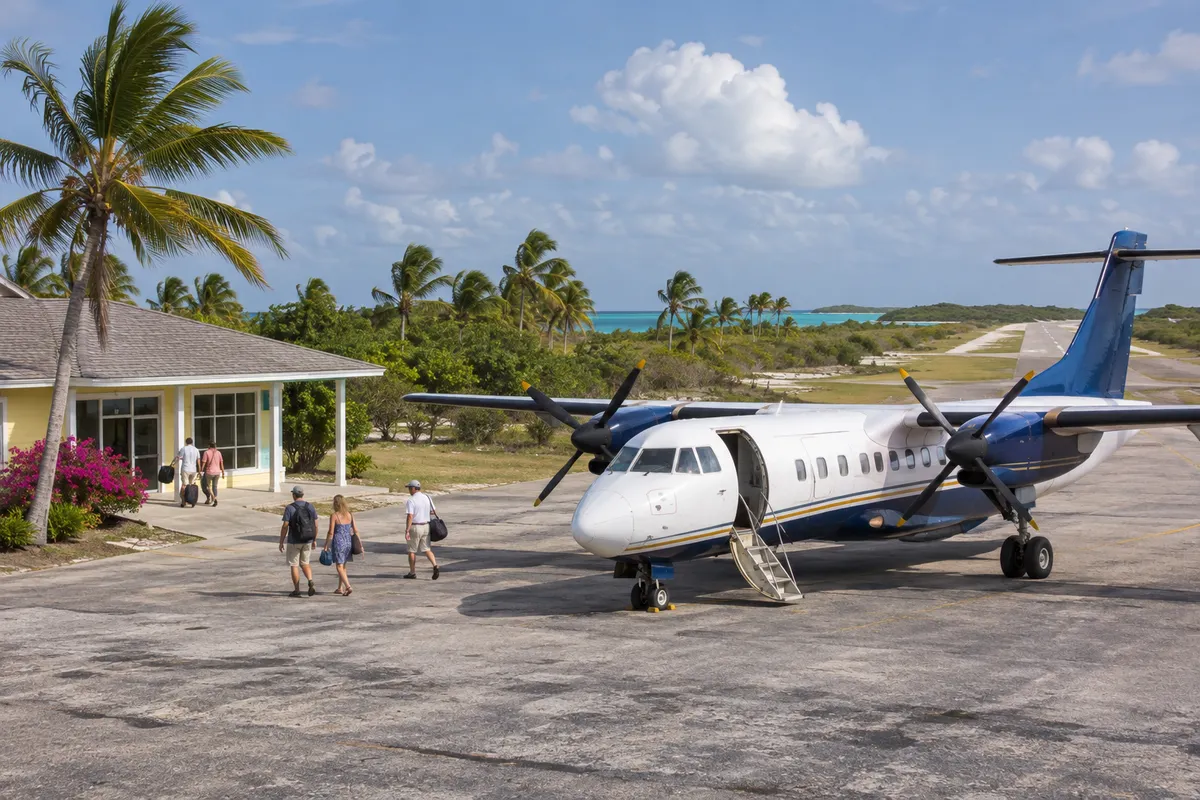
Look for flights to the airport closest to your accommodation. Great Exuma, North Eleuthera, Marsh Harbour and Freeport are examples of gateways beyond Nassau. Direct service varies by origin and season. A hotel on Harbour Island is not adjacent to the airport runway; the usual journey continues by road and water taxi from North Eleuthera.
If you have to connect in Nassau, make allowances for baggage collection, airline check-in procedures and any required arrival formalities. Smaller aircraft may have tighter baggage and size limits. A large suitcase that fits your international aircraft may be inconvenient for the domestic flight or ferry leg. Ask both airlines before packing.
Ferries and private boats
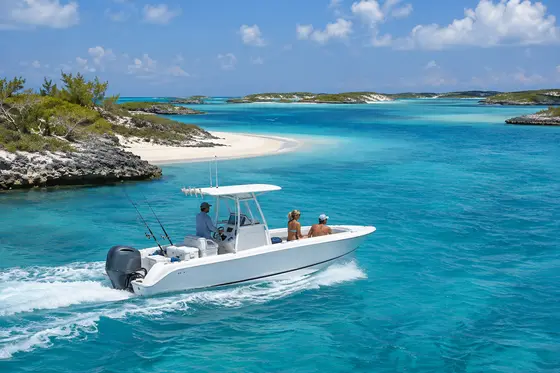
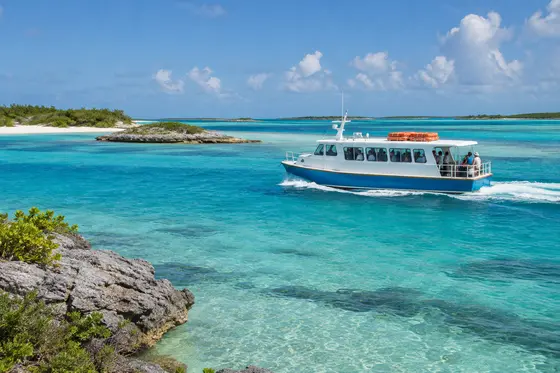
Scheduled ferries connect Nassau with several islands, while local water taxis link villages and cays. A ferry route is a useful alternative to a flight, but it should be booked and timed like transport, not assumed to run continuously. Weekend and holiday services can differ. Conditions at sea also affect services.
Private boat passengers must follow Bahamian customs and immigration procedures at an authorised port of entry. Verify the official requirements before setting out; marina arrangements are not a substitute for the necessary clearance.
Your first evening
Have a plan for the last part of the trip. On smaller islands, taxis may need to be arranged in advance. Rental offices and grocery shops can close before you arrive, so ask your host about a late arrival. Keep a written address and contact number handy in case you have difficulty getting mobile service immediately. Before leaving home, check the current official guide to getting here for carrier information. The exact flight or ferry timetable is best confirmed directly with the operator.
Compare the complete journeys
When an international flight arrives too late for the island connection, it can be cheaper and more comfortable to plan a night near the gateway than to try to organise a last-minute charter. Add the cost of the extra accommodation, baggage and airport transfers to your comparison. If you have time, using the first day in Nassau to see a little of the city can make the connection feel like part of the holiday. On the journey home, leave enough time for the international departure procedures. It is rarely a good idea to rely on a tightly timed local ferry and a separate onward flight.
Choose the right airport code rather than the right-sounding town
An airline search for the Bahamas may return several airports whose names are unfamiliar. Nassau on New Providence is NAS, the principal capital gateway. Grand Bahama International Airport at Freeport uses FPO and Great Exuma uses GGT. Marsh Harbour on Abaco is MHH, a useful search destination if you are heading to one of the surrounding cays. For the north of Eleuthera and the short crossing to Harbour Island, look for ELH, North Eleuthera Airport. Other airports on Eleuthera serve different parts of the island. The official directory of islands identifies many of these airports alongside local places of interest.
Airport names can be confusing when a property is advertised using the name of a wider region. For example, a cottage listed as Abaco might be reached via a ferry from Great Abaco, not by driving directly from Marsh Harbour. Similarly, the Exumas extend along a chain in which not every cay can be reached from the same road or airport. Contact the accommodation directly, give the name of the airport you are considering and ask for the normal transfer arrangements. This is one of the simplest ways to avoid booking a route that saves money on a flight but loses a day in transit.
Work out your international flight options
Travellers coming from farther away frequently need to compare possible connections in North America with flights that reach Nassau by another route. A connection can involve the entry and transit rules of the country in which you change planes. A passenger's ability to transit a particular airport depends on nationality, travel documents and the routing, so do not take for granted that buying a ticket means you are eligible to use it. Consult the relevant government immigration websites for both the Bahamas and any country in which you will connect. The Bahamian Ministry of Tourism publishes visa and immigration guidance; check it in conjunction with your airline and the responsible authorities.
For journeys departing Nassau for the United States, the airport offers US border preclearance. If applicable to your flight, that moves some departure procedures to the Bahamian side of the trip. Check the airline's recommended arrival time, rather than using a rule of thumb based on a domestic airport. When flying to another destination, the arrangements may be different. If you have children or passengers needing assistance, ask about procedures and accessibility before departure and arrange the assistance with the relevant carriers.
Build a connection with realistic margins
Draw up a short list of the necessary steps for each transfer: arrival at the gate, disembarkation, any required inspection, baggage collection, onward check-in and travel to the next gate or terminal. This can be especially helpful when assessing a domestic connection purchased on an entirely separate ticket. Check whether baggage is checked through to the destination under your actual ticket arrangement, not just under a general airline partnership. Find out what would happen to your onward reservation if the first flight arrives late.
Smaller aircraft used on some routes have more limited space for luggage. If you are carrying diving gear, fishing rods, baby equipment or other oversized items, ask the airline how these articles are handled and whether space must be reserved. Carry a basic change of clothing and necessary medicines in accordance with cabin baggage rules. Confirm the current airport security restrictions for liquids, batteries and equipment with the airport or your airline, especially on a journey with international connections. Do not put important paperwork only in a bag that may be delayed on the first flight.
What to know about arriving by ship or ferry
Passengers arriving for a cruise are following a different timetable from visitors who are coming to stay for a week. If you are travelling on a cruise, establish the ship's scheduled departure and the required time to be back aboard in port; these may not be interchangeable with the times quoted by a local excursion provider. If a ferry is part of a longer journey, verify whether the service takes foot passengers or vehicles and what the luggage restrictions are. Confirm the departure pier as well as the town name, since the harbour may have different facilities serving different operators.
For maritime arrivals on a private vessel, the skipper should obtain the current port-of-entry, clearance and permit requirements directly from the relevant Bahamian customs and immigration authorities. Arrival procedures are not something to improvise after reaching a marina. Weather changes, operational restrictions and clearance procedures can affect the first day's itinerary. As a passenger, ask the skipper or charter company what arrangements have been made. Whether travelling by sea or air, keep your accommodation confirmation and return or onward travel documentation accessible in case it is requested.
Plan the trip from the arrival point to the actual bed
The airport transfer is part of the holiday, particularly on an island where taxi service is not necessarily available around the clock. If someone is collecting you, ask for a name, a meeting place, a phone number and the method of payment. Check whether the rental car desk expects your flight number or will remain open if the arrival is delayed. If your evening journey also involves a ferry, speak to your host about a realistic arrival time and any alternative arrangements if the crossing is unavailable.
Travellers who are carrying supplies for a remote rental should be particularly careful about this last stage. Arrange any necessary shopping during business hours, or see if the property can provide basic provisions for the first evening. Have water and a suitable snack available within the applicable customs rules. If the property is difficult to find in daylight, imagine arriving after dark without a working phone connection. Save clear directions in advance. A perfectly good flight can lead to an unnecessarily difficult evening if the last few miles have not been considered.