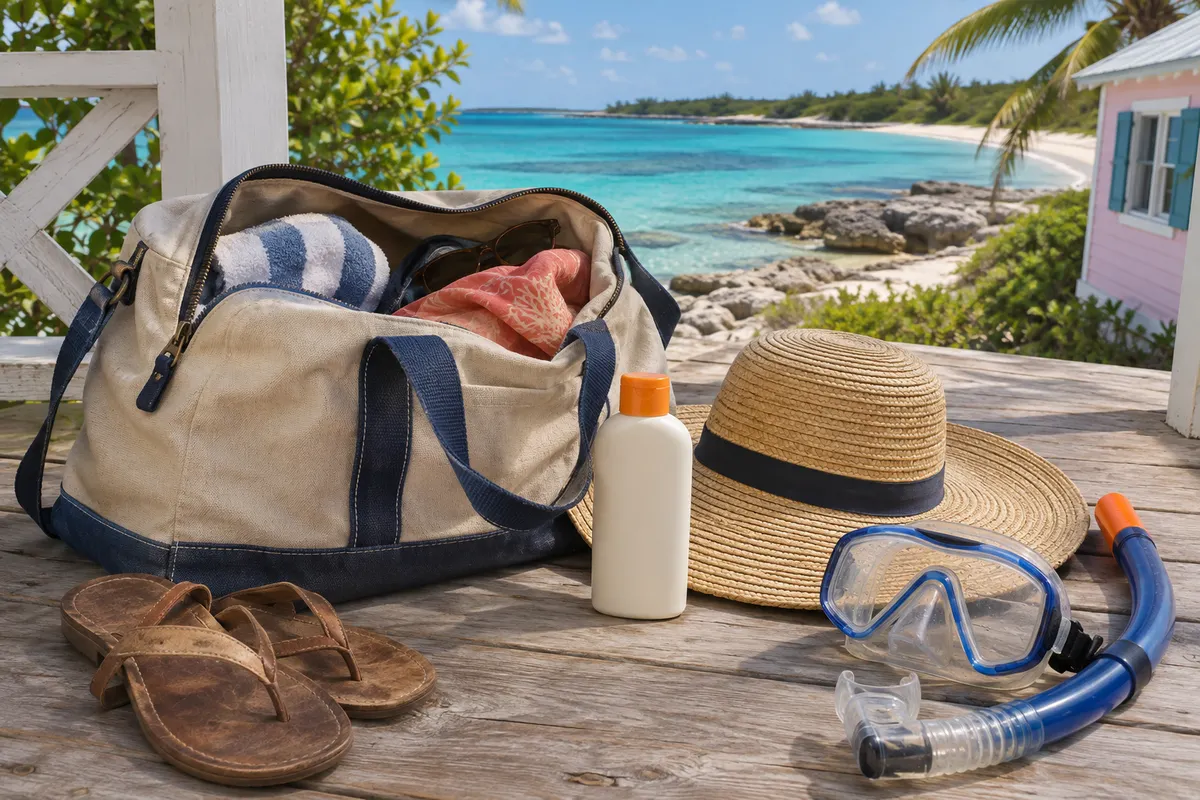
A suitcase for the Bahamas should be light enough to carry across a dock and practical enough for a windy morning. It is tempting to pack four swimsuits and little else, but ordinary island errands and the journey to a smaller cay are easier with a few other items.
Clothing for land and water
Bring light clothes that dry quickly, a hat with a wide brim, sunglasses, and swimwear. A rash guard or light long-sleeved shirt can help on boat days and during snorkeling. For walks over limestone or uneven streets, take shoes that you can actually walk in. Sandals are ideal for a short visit to the beach but not always useful on rocky shorelines. A light sweater is welcome in an aggressively cooled restaurant or when a winter breeze arrives after sunset.
Some restaurants and churches expect more modest clothing than beachwear. Keep one comfortable outfit for town. A compact rain jacket or umbrella can be useful during passing showers, although neither replaces the need to stay out of dangerous weather.
Equipment for the smaller islands
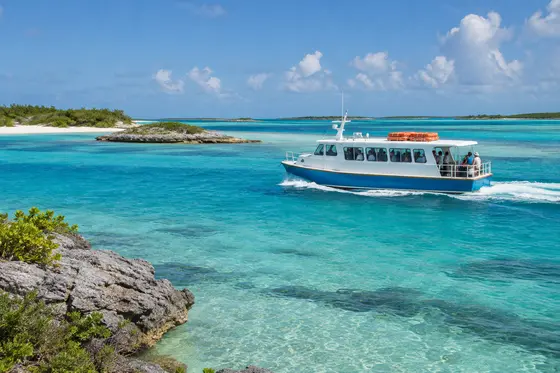
A reusable water bottle, compact day bag and dry pouch for valuables are useful if you will take ferries or spend time on boats. Pack any regular medicines in the appropriate original containers and check regulations for your journey. If you rely on a particular item of equipment, such as prescription glasses or a fitted snorkeling mask, bring it rather than counting on finding a replacement locally.
Many small planes have baggage limits that include both size and weight. Check the allowance on every leg before choosing a large hard-shell case. A soft-sided bag is often easier to stow on a boat, but it will need protection from spray.
The little things
Store copies of bookings and the address of your accommodation where you can view them offline. Keep cards, a modest amount of cash and the documents required for the trip secure and accessible. If you plan to bring insect repellent or sunscreen, check airline rules for liquids and use products responsibly near the water. Do not pack a pile of gear for an activity if your guide provides it. A small bag can leave more room for provisions, local crafts or simply an easier journey home.
A small bag for boat outings
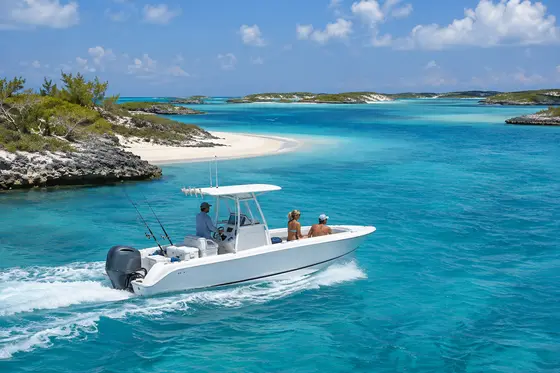
Keep a second bag ready so you do not unpack the whole suitcase each morning. Add a dry change of clothes, a towel, drinking water, sun protection, any necessary medication and a waterproof pouch for your phone. Avoid taking valuables that you do not need. A small bag can be secured easily in the place specified by the crew. Ask the operator what they supply and whether food and drinks are included. If you bring photographic equipment, consider how it will be protected from salt water and spray. Wear suitable footwear for slippery docks and follow the crew's instructions while boarding.
A suitcase for a week rather than a season
A practical wardrobe for a week in the islands might be three or four lightweight tops, two pairs of shorts, a pair of trousers or a skirt for the evening, two swimming costumes and something that can go over them. Clothing that can be washed in a basin and dried overnight gives you a fresh option without another set of outfits. A second swimming costume is particularly useful because you will not have to put a damp one back on after lunch. Bring enough underclothes and socks for the laundry arrangements at your accommodation.
Look at photographs of the hotel or house to see whether there is a line or rack for drying clothes. Do not leave towels or clothing hanging over balconies where they may blow away. A small mesh bag for wet things and a separate laundry bag will prevent a sandy swimsuit from sharing a compartment with your evening clothes. Choose a single pair of shoes for restaurants if you are taking a connecting flight with a tight baggage allowance. The object is to keep a few combinations that work for different occasions, not to bring a new outfit for every photograph.
Making sun protection easier to use
It is worth fitting everything into one pouch that can move between a handbag and a beach bag. That way the sunscreen, sunglasses and lip protection are not left in the hotel when you are going to be outdoors for most of the afternoon. Apply sunscreen in accordance with its instructions and allow for reapplication after swimming. A spare inexpensive pair of sunglasses is surprisingly useful if the main pair disappears under a beach chair, but choose a secure place for both. For a family, labelled bottles and shirts help when everybody's gear is piled together before a boat leaves.
Light fabric can offer little protection once it becomes wet. Consider a dedicated sun-protective top rather than relying entirely on a thin white cotton shirt for swimming. A hat with an adjustable strap is less likely to vanish in the wind. Ordinary towels are fine at a hotel; a quick-drying towel takes up much less space on a small-plane itinerary. If you plan to exercise, use the cooler parts of the day and keep water with you. The CDC's Bahamas travel health guidance is a useful place to check health precautions before travelling.
Put important supplies in the cabin bag
Your checked bag may reach the island on a later service than you do. Keep one change of clothing and essential toiletries somewhere you can reach without opening the big suitcase. Glasses, contact lens supplies, necessary medical equipment and personal medication deserve space before spare shoes or decorative accessories. Bring a sufficient supply of any regular prescription for the whole trip, discuss unusual storage requirements with your pharmacist and check the destination's rules if a medicine is restricted. In a hot climate, a prescription that needs refrigeration cannot simply be kept all afternoon in a parked car.
The same approach applies to children. A familiar toy, a snack allowed through the relevant border and a change of clothes make a delay considerably less difficult. Travellers with specific dietary requirements can check what a small hotel can supply before leaving home. Rather than packing an entire food cupboard, ask which ordinary foods are available on the island and learn which items are subject to customs restrictions. A traveller arriving in Nassau has more choice of shops than someone arriving on a distant cay.
Chargers, photographs and keeping in touch
The Bahamian tourism authority's entry and practical travel information notes that the electricity supply is generally 120 volts at 60 hertz. Check the label on every charger or appliance. A plug adapter changes the shape of the connection, not the electrical voltage. Many modern phone chargers accept a broad voltage range, but an older hair tool may not. It is easier to inspect the label at home than to solve a damaged appliance problem in a rented room.
For electronics, consider what you can comfortably charge each night. A long enough charging cable is handy when a wall outlet is away from the bed, and a labelled charger is easier to retrieve from a shared room. If you bring a power bank, follow your airline's current rules for carrying lithium batteries; limits and packaging requirements are available directly from the airline. Store your host's telephone number, airport details and any travel insurance emergency contact offline. A phone is wonderful for photographs, but do not make it the only source of every piece of information required for the onward journey.
The last check before closing the bag
Lay out the necessities and put the travel documents to one side before weighing the rest of your luggage. Check each reservation to confirm the spelling of your name, departure airport and exact date. Check visa or document requirements for your nationality directly with the relevant authorities. A person continuing to an island from Nassau may need a different check-in process for a second airline, so keep those instructions within reach. Passport copies can assist in recovering lost details but are not a substitute for the original when it is required.
Empty the bag of things left over from a previous holiday, especially small tools, forgotten toiletries and spare food. Check airline security requirements and the rules on importing or exporting restricted items. Allow a little space for a locally made textile, a straw basket or artwork if you intend to shop. Do not assume that a shell or piece of coral can legally be carried home. The most useful packing list is the one that reflects your actual days away: if you are spending them between a garden apartment and a nearby beach, that will be rather different from a week sailing among the cays.