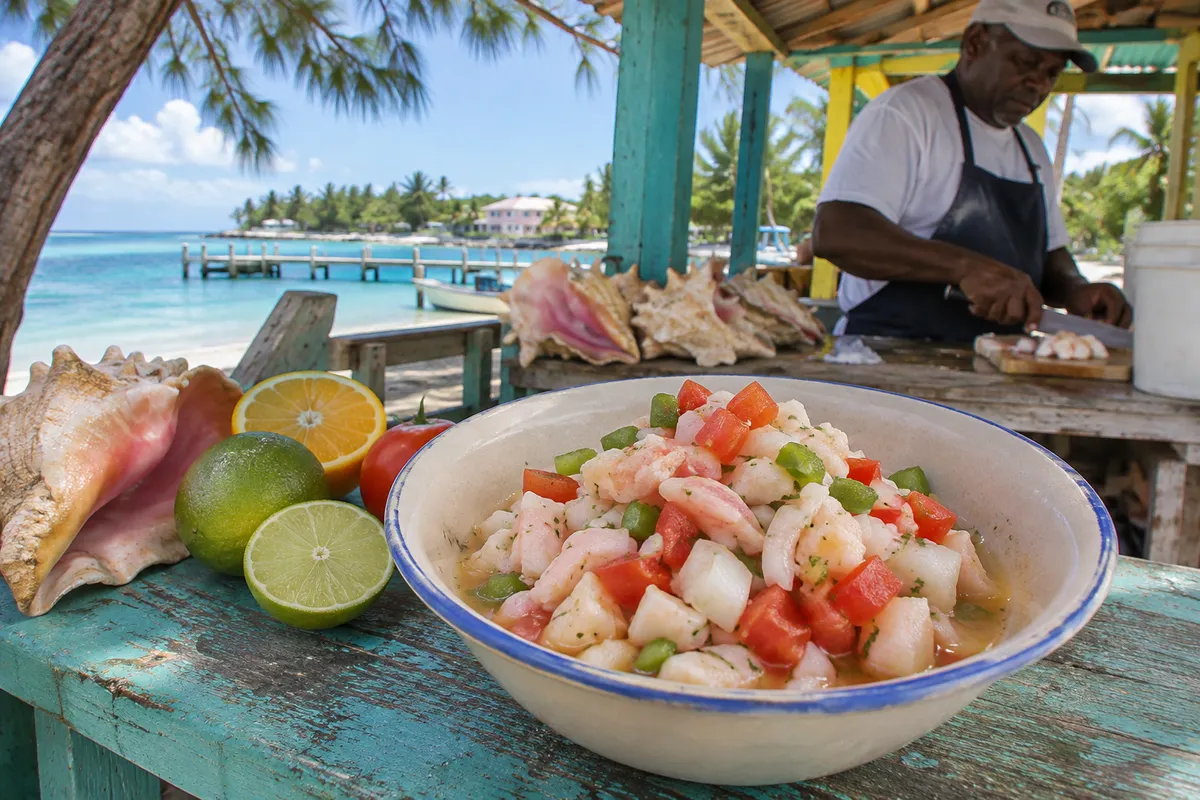
At a harbour-side counter, conch salad can be assembled almost as quickly as a customer describes how much pepper to add. It is one of several ways Bahamian cooks have developed to prepare the large marine snail. Its mild flavour and firm texture change considerably according to how it is cut or cooked.
Different dishes, one ingredient
Conch salad traditionally combines pieces of raw conch with citrus juice, chopped vegetables and hot pepper. Citrus changes the texture and taste of the meat but is not equivalent to cooking it thoroughly. If you have health concerns about raw seafood, choose a cooked preparation and follow appropriate food-safety advice.
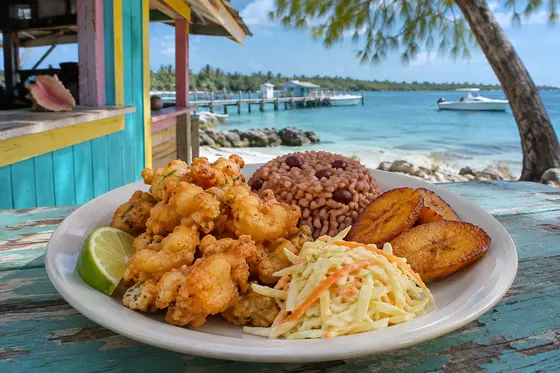
Conch fritters are smaller bites, their flavour and texture depending on the seasoning and proportion of meat in the batter. Cracked conch typically has a fried coating and is served with side dishes. Stewed conch takes a more leisurely approach to the ingredient, often resulting in a sauce suitable for eating with bread or rice. Different cooks have their own methods of tenderising the meat and preparing the seasoning.
From sea to table
Queen conch lives in shallow marine habitats, including seagrass areas. Declining populations have led to concerns over harvesting pressure in the Bahamas and elsewhere in the Caribbean. Harvest and sale are governed by regulations, which can change. If you are buying a conch product or shell, verify what is lawful, including any restrictions on taking it out of the country. Never collect live animals from reefs or protected areas.
A reasonable way to try the local food
A food stall or small restaurant can be a good place to compare preparations, provided it follows sound hygiene and local fishing rules. Ask how the dish is prepared and choose something appropriate to your preferences. There is no need to eat conch at every meal. Try local fish, a vegetable dish or other available choices too. The appeal of Bahamian cooking comes from the variety of recipes and the skill of the people who make them.
A note on shells
The broad lip of a mature conch shell is a familiar shape in local displays. Tourists sometimes encounter shells washed up on the beach, but a shell that looks empty may be occupied by a living animal. Leave it alone. There may also be restrictions on removing shells or exporting them, and purchased souvenirs are not automatically exempt. If you are interested in the shell as a piece of natural history, examine it where it lies or ask a local guide about its role in the ecosystem. A photograph is a much simpler keepsake.
The animal behind the familiar shell
Queen conch is a sea snail, known scientifically as Aliger gigas. In a fish market the curled shell can look as solid and inert as a stone; in the water it contains a living animal which feeds and moves across the bottom. Young conchs prefer habitats such as sheltered seagrass beds, where there is food and some cover. Larger animals can occur on open sandy flats and other shallow habitats. The animal grazes on small algae and organic material, so the neat, pink-lipped shells seen on land are only a glimpse of a much more complex part of the coastal environment.
Conchs are relatively slow to reach maturity. As an adult grows older, the shell's flared lip becomes thicker rather than getting indefinitely longer. This is one reason that large overall size alone is not a reliable indication of whether an animal is mature. Adults need to encounter each other to reproduce, and depletion of local populations can make recovery difficult. NOAA Fisheries' queen conch species profile explains the animal's biology and the pressures on wild populations. For visitors who want to see marine life, a conch making its way among sand and seagrass is an interesting sight in its own right.
How the different preparations arrived on the plate
People sometimes expect conch to taste like a clam, or even like an ordinary piece of white fish. The important difference for cooking is the texture. It has a relatively robust muscle and can be unpleasantly firm if handled carelessly. Slicing, chopping and tenderising all influence how a cook develops a meal around it. Heat and time have different effects in a stew than in a thin piece of fried meat. Conch meat also has a mild flavour that accommodates strong citrus, pepper and onion without disappearing completely underneath them.
The names on a menu may be more revealing than the word conch itself. Alongside the familiar salad, scorched conch is often a simpler citrus-and-pepper preparation, rather than a dish browned in a hot pan as its name might suggest. Some stands serve tropical salads with fruit for a sweeter element. The taste then depends on the kind of fruit, the acid and the amount of pepper used. A fried dish with a substantial coating has a completely different character. The tourism guide to the five popular conch dishes is a starting point, although recipes are by no means standardised.
Visiting a seafood counter
There is often a useful practical distinction between an open counter where a salad is mixed to order and a restaurant kitchen that serves full seafood meals. At the former, a visitor can see the vegetables being cut and discuss the amount of hot pepper in a dish. At the latter, there may be more alternatives for people who prefer a cooked meal. It is also worth noticing whether plates are being prepared in advance, how raw ingredients are kept and whether the premises look clean. Popularity is not by itself a guarantee that food has been stored or handled safely.
If you are being offered raw conch, remember that citrus juice does not eliminate every foodborne hazard. Neither the way a dish looks nor the amount of lime added provides assurance against illness. Children, pregnant people, older adults and people with certain conditions are especially advised to avoid raw or undercooked seafood. The FDA's seafood safety guidance explains why thoroughly cooked seafood is preferable. A stew, grilled preparation or cooked fritter still offers an introduction to the ingredient, without the particular risks of leaving it raw.
Feeding a community and an industry
Fishing remains a source of income on many of the Family Islands. Conch has been important enough to shape not only menus but also conversations about jobs, food supplies and the way marine areas are managed. In places far from large shops, something caught nearby can be both a source of meals and a product for sale. A specialist conch stand depends on that supply. Overharvest, on the other hand, makes the business more vulnerable as the people who fish must spend longer looking for the same amount of seafood. This is not merely a problem for a restaurant hoping to satisfy visitors.
Look at the coastal landscape where boats work: the shallow seagrass, the sandbars, the deeper cuts and the landing places. Each has a different function. Conservation of the areas used by young animals and the maintenance of viable adult populations matter alongside the rules governing the sale of conch. The Bahamas National Trust's work on vulnerable species gives a local perspective on the need to protect marine wildlife. Avoid buying an item that a seller cannot explain, and be prepared to choose another dish when conch is not available.
What to try if the menu has several conch dishes
If the whole party is comfortable with cooked seafood, a small plate of fritters is often the simplest starting point. One order may be enough to share, and it is easier to learn how strongly the cook seasons the food this way than by ordering a large dinner immediately. For a main course, choose a stew if you enjoy a sauce to eat with rice or bread, or a freshly fried preparation if you prefer a crisp coating. A grilled option lets the meat's texture and seasoning stand out with fewer competing flavours. Ask what comes alongside the dish and how much food to expect.
At the end of the meal, there is no reason to feel that sampling one preparation has exhausted Bahamian food. People who enjoy conch fritters may also like a bowl of chicken souse or a plate of cooked fish, and the sides are often just as distinctive. The more useful souvenir of the experience is an understanding of how cooks use a difficult texture and an available local ingredient. Keeping the resource viable is what makes it possible for a future visitor to sit down to a similar meal.