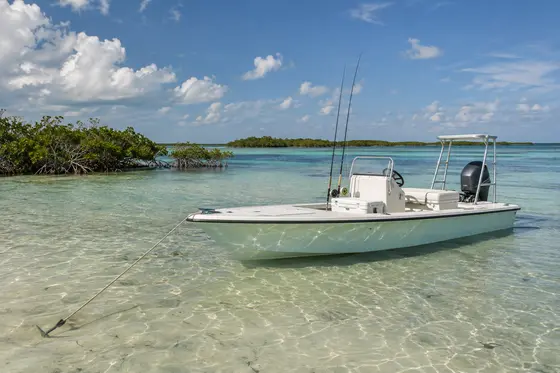
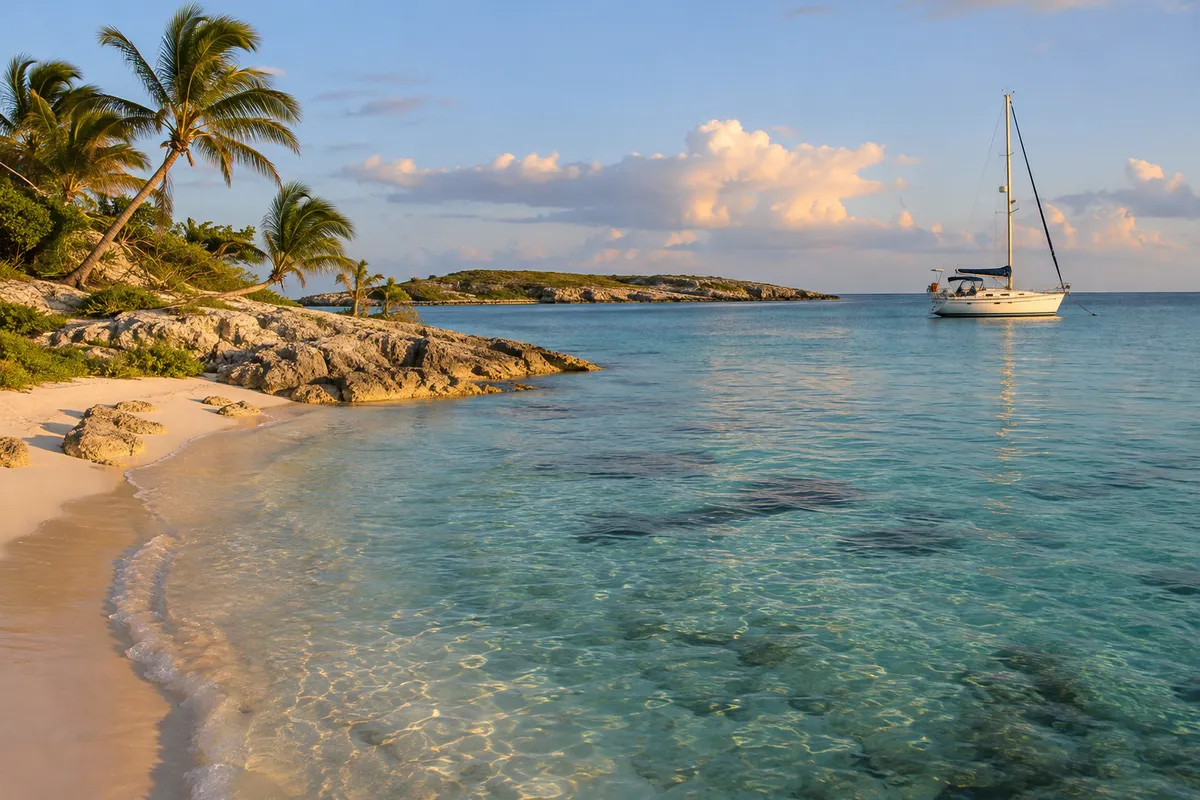
For people who enjoy sailing, the Bahamas presents an appealing sight: low islands, protected anchorages and clear water that changes colour with every shift in depth. The archipelago's shallows also explain why a beautiful sailing area is not necessarily an easy one. Much of the attraction lies in planning a route around conditions rather than insisting on a fixed schedule.
The traditional cruising areas
The Abacos are a familiar destination for sailors. The Sea of Abaco provides access to several harbour settlements, although tidal channels and reef areas need careful navigation. Farther south, the Exumas offer a long chain of cays separated by shallow waters and deep cuts. Anchorages are not interchangeable; their suitability can change with wind direction and current.
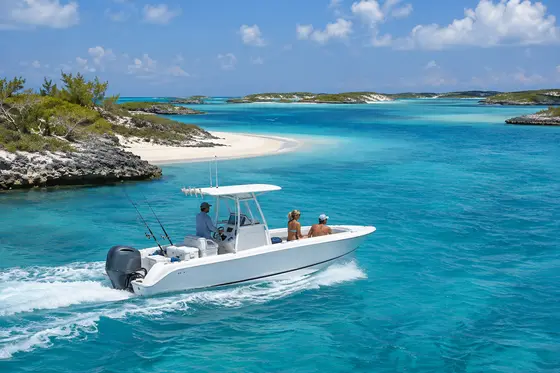
Many visitors who do not have their own yacht enjoy a skippered trip, or a day on a local boat. It is an easy way to appreciate the landscape without taking on responsibility for unfamiliar navigation. For those chartering a vessel, experience in similar waters, appropriate training and up-to-date navigation resources are essential.
A night at anchor
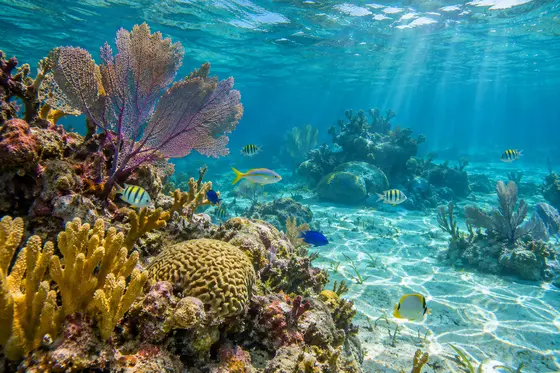
A well-chosen anchorage provides shelter and a quiet evening, but mooring and anchoring rules matter. Reef and seagrass habitats can be damaged by an anchor or its chain. Use designated moorings where required and observe restrictions within marine parks. Check whether shore access is permitted before landing on a cay. Do not leave rubbish on beaches or discharge waste in prohibited areas.
Planning the voyage
Arrange customs and immigration clearance when entering by private vessel, and confirm the current requirements with the relevant authorities. Keep adequate time for provisioning, fuel, maintenance and changes in weather. A sailing holiday is not a race to tick off every harbour. Pick a sensible cruising area for the time available, and be willing to spend another morning watching the water when the weather does not favour the next leg.
The villages along the way
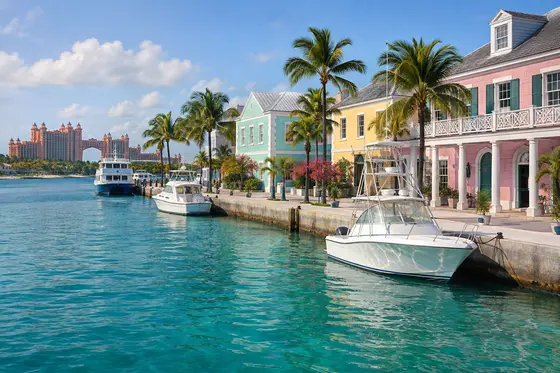
Many harbour settlements grew around working docks and the movement of goods by sea. A visit ashore can be an enjoyable part of a cruise, especially early in the day when shops are opening and boats are coming and going. Find out where visitors may land and avoid leaving a dinghy in the way of local boats. Buy what you need from local stores, ask about water or waste facilities and learn about the village's history. The appeal of sailing in the Bahamas includes these stops as much as the open anchorages.
Sailing regions that suit different holidays
The archipelago covers a large portion of the western Atlantic and different island groups offer distinctly different cruising landscapes. The phrase island hopping can be a little misleading here. A vessel travelling along one group of cays sometimes moves relatively little between settlements, but a trip to an entirely different part of the country may involve a much longer journey across exposed waters. For a leisure cruise, choose a region based on available time, the experience of those aboard and the type of surroundings you hope to appreciate.
Bimini is one example of a destination with long-established connections to boats arriving from Florida, while the Abacos are suitable for exploring a series of harbour settlements within the wider island chain. The Exumas appeal to visitors interested in a quieter landscape of cays, shallow banks and protected marine environments. The official boating guide to the Bahamas is helpful for exploring these regional differences. It is an introduction to the destinations, not a substitute for the detailed resources and professional advice required to travel safely on the water.
A holiday in the Abacos
The Abacos offer a close relationship between land and sea. The larger settlements provide shops and other services, while comparatively small islands have harbours and modest communities well known to people who visit the area by boat. Around Elbow Cay, Hope Town's lighthouse stands prominently within the harbour landscape. On Green Turtle Cay, the community of New Plymouth reflects the islands' strong maritime connections. A visitor need not have a vessel of their own to enjoy this atmosphere; local ferry and boat services connect some of the settlements, subject to schedule and conditions.
The distances between places within an island group can also be deceptive. Where the water is shallow or local conditions make passage difficult, the route a vessel can realistically take is not necessarily the one that seems shortest on a general map. A booking with a skippered charter company can be a good option for people attracted to the scenery and history but unfamiliar with these waters. Make the itinerary a discussion with the skipper rather than a list of compulsory overnight stops. Time spent ashore is also part of a worthwhile sailing trip.
How the protected Exuma Cays shape a voyage
A sequence of low rocky cays, shallow water and broad horizons makes the Exuma chain quite different in character from the larger inhabited islands. The Exuma Cays Land and Sea Park protects part of this landscape. Its boundaries encompass areas where fish, corals and other marine resources are protected from harvesting, and specific restrictions apply to visiting vessels. Review the Bahamas National Trust information about Exuma Park before visiting. An experienced skipper should know which activities and overnight arrangements are suitable within the area.
The park headquarters at Warderick Wells is in a setting that shows the demands of life on an island far from a large town. There is a particular appeal to visiting places where the natural landscape is the central attraction and services are deliberately limited. Expect to enjoy the coast, observe the water from a permitted viewpoint and respect restrictions on the use of natural resources. The park is a conservation area, not a marina complex offering unlimited supplies. Provisioning for the trip and making suitable waste arrangements are responsibilities to discuss before departure.
When the conditions determine the pace
Wind and the wider ocean can affect a sailing holiday even under a cloudless sky. An apparently calm harbour can be quite different from the conditions a short distance offshore, especially if an ocean swell reaches an exposed coast. At the scale of an entire archipelago, routes suitable for a particular day depend on local observations, changing weather and the capabilities of the people and vessel involved. Cruising schedules should therefore be treated as flexible.
Ask the operator about their arrangements when a planned destination cannot be reached or the crew needs to stay longer in a harbour. This question matters particularly if the holiday is built around an onward flight. Rather than organising that flight for immediately after a planned return passage, leave time to deal with unforeseen changes. The formal Atlantic hurricane season is another consideration, but strong winds and changing conditions are possible outside that period as well. Follow professional and official advice throughout the year. Travellers who do not enjoy longer passages may prefer a land-based stay supplemented by shorter supervised outings.
What to discuss with your charter company
The boat itself may be your accommodation, transport, dining room and place to relax for much of the holiday. When comparing options, think about the comfort of your group rather than the most impressive vessel pictured in a brochure. Find out how sleeping spaces are arranged, how many passengers will be aboard, what meals are included and what facilities are available when visiting ports. Ask about accessible boarding, arrangements for young passengers or other particular needs if relevant, and what the crew expects of guests.
Some people like the rhythm of preparing together for days on the water. Others prefer an arrangement with crew responsible for the entire operation, allowing passengers to enjoy the scenery without acquiring additional duties. Be transparent about everyone's previous experience, and do not assume sailing skills in one region automatically prepare a visitor for the shallows and passage conditions of the Bahamas. If chartering independently, the operator will need to establish the crew's suitability for the vessel and route. Professional assessment and current nautical information remain essential parts of a voyage.